



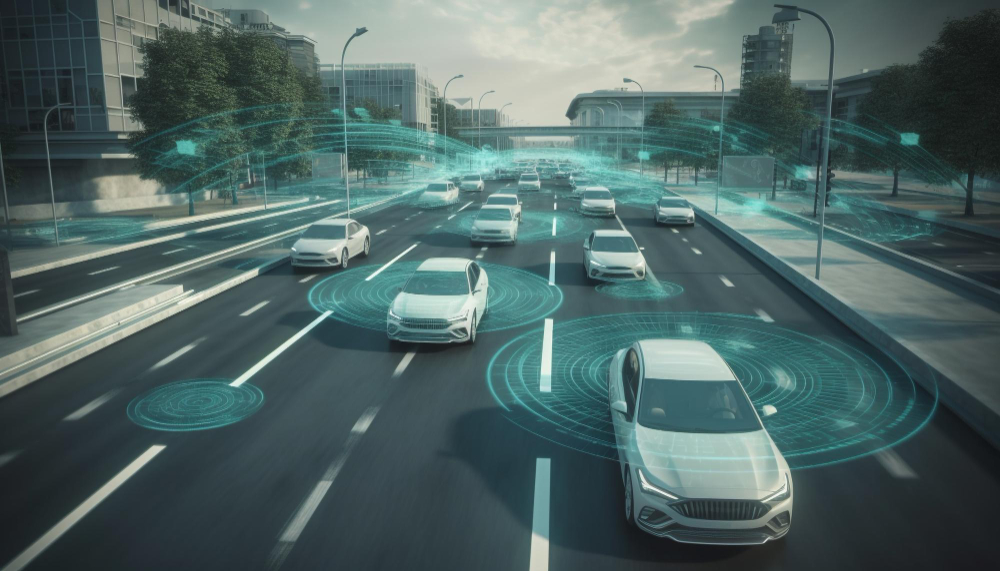
The journey towards a future dominated by driverless vehicles is unfolding slowly but surely. Recent incidents, including a viral mishap involving a Waymo taxi, have sparked renewed public scrutiny about the readiness of autonomous technology. Despite setbacks, companies like Waymo continue to lead the charge in the development of self-driving cars.
Key Takeaways
- A recent incident with a Waymo taxi raised questions about the reliability of driverless technology.
- Waymo claims its vehicles are safer than human drivers, despite previous recalls and investigations.
- Other companies, including GM and Apple, have scaled back or abandoned their autonomous vehicle projects.
- The future of driverless vehicles may be more promising in regions with favourable weather conditions.
The Waymo Experience
In December, Mike Johns experienced a rather unusual ride in a Waymo driverless taxi while travelling from Los Angeles to Scottsdale, Arizona. Instead of a smooth journey, he found himself circling a car park, unable to regain control until he accessed the Waymo app. This incident, which he recorded, quickly went viral, highlighting the challenges faced by autonomous vehicles in real-world scenarios.
Waymo, owned by Alphabet, responded promptly by releasing a software update to address the issue. The company asserts that its technology is superior to human drivers in avoiding serious accidents, yet this is not the first time it has faced scrutiny. In 2022, Waymo recalled over 600 vehicles after one collided with a street pole, and the National Highway Traffic Safety Administration has launched investigations into multiple incidents involving its cars.
Industry Setbacks
The road to a fully autonomous future has not been smooth for all players in the industry. General Motors recently shut down its self-driving subsidiary, Cruise, citing the extensive resources required to scale the business. Similarly, Apple’s self-driving car project appears to be folding, and Uber abandoned its driverless efforts in 2020.
Despite these setbacks, Waymo remains a frontrunner in the US market, operating self-driving taxis in cities like Phoenix, San Francisco, and Los Angeles, with plans to expand to Atlanta and Miami.
Factors Behind Waymo’s Success
Experts attribute Waymo’s relative success to three key factors:
- Talent: Waymo has recruited leading experts in autonomous vehicle technology.
- Financial Backing: The substantial resources of Alphabet provide a significant advantage.
- Regulatory Compliance: Waymo has established a thorough approach to working with regulators, ensuring safety and compliance.
Future Prospects
Looking ahead, regions with favourable weather conditions, such as southern US states, are likely to see the first widespread deployment of driverless services. According to Philipp Kampshoff from McKinsey, robo-taxis perform better in good weather, and battery efficiency is enhanced in warmer climates.
However, the rollout of this technology will be gradual and labour-intensive, requiring extensive testing and data analysis. Safety remains a paramount concern, and any major accidents could halt progress in the industry.
The Global Landscape
While the US is making strides, China is also advancing rapidly in the realm of autonomous vehicles. Baidu operates over 500 driverless cars in Wuhan, with numerous manufacturers testing their technologies across 16 cities. This competitive landscape may accelerate innovation and deployment of driverless vehicles globally.
As Mike Johns reflects on his experience, he notes that the public is essentially part of a large-scale experiment in autonomous technology. The industry is learning and adapting as it goes, which raises questions about the pace and safety of this transformative journey into the future of transportation.
